Jekyll2025-07-15T18:29:28+00:00https://tin.fyi/feed.xmltin.fyiI am Tin Geber. I write about technology, art, algorithms, and activism.tin.fyime@tin.fyiThe social worth of art without value2018-03-10T00:00:00+00:002018-03-10T00:00:00+00:00https://tin.fyi/social-worth-art
Today’s topic is participation in art. The texts behind this article make a particularly convincing case that we’re in dire need of dismantling of surface-level tropes around artistic participation, if we’re to save art as a socialised and social action.
Claire Bishop’s “Artificial Hells” is a particularly on-point critique of the neoliberal appropriation of the social inclusion rhetoric. The Orwellian doublespeak in advocating for social inclusion to promote individualism is as appalling as it is hind-sight obvious, as this quote sums up:
The social inclusion agenda is therefore less about repairing the social bond than a mission to enable all members of society to be self-administering, fully functioning consumers who do not rely on the welfare state and who can cope with a deregulated, privatised world. (Bishop)
Alan Kaprow’s “How to make a happening” advocates for a complete removal of art and performance from participatory events, in order to dismantle the preconceived notions of what “art” should be, of who is meant to evaluate it and by which metrics. “No Ghost Just A Shell” by Huyghe and Parreno create a participatory frustration of the commercialisation of creativity, by purchasing an off-the-shelf manga character and infusing it with community-created life.
These three readings of participation in art all share a fil rouge of creating socially shared art by subverting what art means, both as academic concept, and as economic product, in order to redefine how artistic endeavours can connect people. However, why should that be a bad thing? Doesn’t the recognition of value in art simply state that there is worth in what we’re creating, since someone else would be willing to part with something of their own in order to partake in it?
The risk lies in misguided incentives: if we acknowledge that art holds value, we then recognise that such value runs the risk of becoming more important than art itself, and the drive for (academic, economic) profit tends to replace the drive for creation and participation. In other words, we run the risk of mistaking the pickle salad for the main dish. Another problem is the false codependence of value and worth: if we consider that only those artistic endeavours that hold recognised value are worth pursuing or funding, since they can be measured and quantified as having value, we risk losing focus of all the potential explosions of innovation that might come from pursuing valueless endeavours.
I am personally a huge fan of valueless endeavours. In order to have value, a thing needs to be recognised as valuable by some entity. That entity needs to have had previous experience with such a valuable thing, in order to be able to assign value to it. Therefore, objects with value are by definition already-seen solutions and repetitions of previous valuable things. Something truly new will have no value assigned to it when it’s born, because no one can know how to parse it for value — it will become value-ready only once it gains enough momentum and visibility to initiate the feedback loop of positive judgement by the audience. But in its birth and initial stages, it will necessarily be a valueless endeavour.
What is the dimension of pursuing valueless collaboration within computational arts? The medium itself provides massive potential for collaboration with reduced barriers of entry. An example of collaborative happening is Twitch Plays Pokemon — a 300-hour tour de force game of Pokemon Red where commands were issued exclusively via real-time chat by whoever was logged in at the moment. With peaks of tens of millions of viewers, the community incredibly managed to finish the game, and provided an example of a generative, emergent, online happening that subverted the commercial logic of a consumer product.
When discussing the potential for collaboration within computational arts, we need to take into account the non-human actors in this collaborative space. Algorithmic decision making and filtering means that communication and collaboration flows will be influenced by non-human actors. This, depending on the platform or medium, can be both a positive and a negative addition to the artistic space. For example, if the algorithmic mediation is driven by consumerist ideals, it will tend to manipulate the information stream towards a ROI logic; but we can easily imagine an algorithmic mediation mechanism designed specifically to produce unexpected artistic worth within a larger collaboration of human and non-human actors, for the emergence of art that truly hasn’t been seen before.
]]>tin.fyime@tin.fyiThoughts on climate change sensing and environmental citizenship2018-02-28T00:00:00+00:002018-02-28T00:00:00+00:00https://tin.fyi/thoughts-sensing-environmental-citizenship
On Sensing
Before you read on, refresh your Whitehead and process philosophy. If we are to reimagine how environmental sensing is being conducted — under which premises, or assumptions, is the methodology constructed, how are sensors constructed, positioned, calibrated, and operated, etc, we should be mindful of not losing track of the root cause issue: are we measuring the right thing, or can that thing be seen as an effect of another event that we should be measuring instead? We need to observe the causality of findings, and make sure that our reimagining of sensing doesn’t confuse correlation with causation, or, even worse, doesn’t focus sensing on the wrong factor that could be more easily understood by finding the root cause and measuring it instead.
On the other hand, perhaps we would be better served by sensing factors and events that are not root causes: perhaps a more abstract perspective would give us a more understandable, more immediate answer to our questions. a computational analogy comes from machine learning: support vector machines, or SVMs, augment the number of dimensions of a problem in order to make the problem easier to understand when observed.
On exploring alternative sensing methods
The conceptual framework of the text borrows heavily from Whitehead and process philosophy, and understanding this was key to my understanding of the complexities that the text was grappling with. In short, if we look at measurements from a process philosophy point of view, they are fundamentally flawed static snapshots of an ontology that can only be understood as concrescent; fluid; becoming.
Then, in order to tease meaning out of measurements, we use machines to knit them back together into an approximation of process that is more understandable, more legible, clearer in explaining the specific issue we wanted to filter out of the awesome complexity of everything becoming at once. However, the quasi-world we conjured for ourselves is a zombie made out of pictures of dead corpses — twice removed from the process it tries to describe. And there is nothing inherently wrong with this — simplification is sometimes the only tool at our disposal for capturing knowledge — but we need to keep in mind the noise we’re introducing in the signal through implicit and explicit design and implementation flaws and abstractions of interpretation.
Seen from this perspective, the search for alternative, parallel, different ways of sensing environmental change helps us spark a mosaic effect — in data science, a phenomenon in which the combination of multiple datasets with incomplete information exposes knowledge that no single dataset holds. community sensing projects, and artistic endeavours — especially ones using computational techniques — therefore play a crucial role for a more complete understanding. I will avoid using the word “holistic,” especially in this context, because no matter how many information matrices we overlap to create a patchwork of knowledge, we are still and always working with twice-removed abstractions of reality. So at most, we will get a more realistic-looking zombie.
On expanding citizenship
I struggled with the semantic looseness of assigning citizenship to entities other than humans, for two reasons: firstly, the concept of being a citizen and what a citizen does is inherently human, made by and for humans, so forcing this over to entities other than humans reeks of determinism (or, in other words, we should try a bit harder to find a more inclusive term.) Secondly, I am troubled by the exploitative side of assigning citizen responsibilities to entities that didn’t, or couldn’t, autonomously request it. With this I am not saying that extracting data from fish, birds, or water toilets is unethical (as long as no one gets hurt) — I’m saying that we’re, again, being lazy and loose by defining this as “gaining citizenship” — we, at the same time, dilute the term and mislabel what we’re actually doing.
However, there is an angle of expanding citizenship that, in my opinion, is both mutually beneficial and offers a correct use of the term: providing non-human actors with a voice. For example, the NYC tree project is giving each tree self-reporting capabilities — basically, a voice that we can hear and act upon. The dontflush.me project gives a voice to toilets, that become capable of expressing their state and warn humans about the risk of their interaction. I am not being facetious — I know this might sound sarcastic, but I truly believe this approach is full of sense and importance.
The paper’s final chapter is a series of “what if” questions around an interesting, but under-explained concept: considering relations as real as things, from a perspective of radical empiricism and indigenous and feminist technoscience. In my opinion, this hybridisation is already being done, regularly and successfully, in the fight to keep the environment suitable for humans. Hard data is being collected and combined with storytelling, as well as grassroots-led actions, across the world.
All of this to say — I would love to see further exploration of existing multi- and alt-sensing operations, and citizenship amplification projects, from around the world.
Notes on text: “Sensing Climate Change and Expressing Environmental Citizenship,” chapter 4 in “Program Earth”, University of Minnesota Press
]]>tin.fyime@tin.fyiSubverting techno-colonialism2018-02-20T00:00:00+00:002018-02-20T00:00:00+00:00https://tin.fyi/subverting-technocolonialismOriginally posted on the Goldsmiths University Computational Arts blog.
Emo de Medeiros, Vodunaut #002 (Hypercharger). Picture by Marcelrose, CC0.
Neo- and techno-colonialism
The international aid sector today struggles to shed vestiges of Western colonialist worldviews and tendencies — and, arguably, actively perpetuates the same imperialist power dynamics that were in part or in sum responsible for creating the problems it aims to solve (Wai 2014; Alemazung and Others 2010; Sagoe 2012). International aid, in its most negative expression, can be linked to neocolonialism, a term coined by Sartre and formalised in 1961 at the All-African Peoples’ Conference describing a framework that enacts
…political, mental, economic, social, military and technical forms of domination carried out through indirect and subtle means. (“Africa: All-African Peoples’ Conference Statement on Neocolonialism
Pambazuka News” n.d.)
Whether international aid is an active contributor to neocolonialism isn’t the focus of this paper. Even if we strip away all questions of intent, aid’s mechanics and delivery mechanisms are still affected by neocolonialist top-down imposition of the Western-influenced “correct” and “appropriate” ways to better “the other.”
This paper inhabits the spaces of embodied knowledge and technology: more specifically, it focuses on techno-colonialism (a subset of neocolonialism that focuses on technology as means of delivery of neocolonialist practices) in international aid. Through a techno-feminist analysis of the international aid’s relationship with digital identity simulacra, it proposes a way to subvert and disrupt techno-colonialist systems through re-situated technological artistic creation.
Embodied knowledge and techno-solutionism
Technology in development has been a hot topic since the 60s. Over the years it has undergone various strategies and approaches — each phase complicated the understanding and relationship further, learning from past experiences. From the adoption phase of the 60s, we transitioned into the transfer phase in the 70s and 80s, and then the innovation phase of the 90s. We’re currently struggling to understand how to strengthen embodied knowledge through learning and agency (Heeks and Stanforth 2015; Johnson and Andersen 2012).
The embodied knowledge approach holds promises of true detachment from the techno-colonialist yoke. However, in recent years, technological solutionism has taken the world of international aid by storm (Morozov 2013). The promises of technological progress are many: technological advances in aid product and service delivery will reduce costs, raise efficiency, ensure sustainability, and foster true multi-stakeholder ownership. The rate of acceleration of technological advances holds an implicit promise of untold wonders that fascinates many: for example, when forging the Sustainable Development Goals, the United Nations Secretary-General formed an Independent Expert Advisory Group tasked with “making concrete recommendations on bringing about a data revolution (UN Secretary-General’s Independent Expert Advisory Group on the Data Revolution for Sustainable Development 2014).”
The identity problem: digital simulacra
There is no doubt that technology can deliver, and has delivered on, some of its promises. From improved tracking of Ebola outbreaks thanks to big data analysis (Nieddu et al. 2017) to hacked solar-powered smartphones in rainforests that listen for sounds of chainsaws in order to report illegal logging (Cavanaugh 2018), technology in international aid does enable successes that were previously impossible. However, while there are benefits to a techno-colonialist model, they don’t challenge the underlying dichotomy of the model itself; a differentiation of the archetypes of “aid provider” and “aid recipient.” They are, in fact, incapable of challenging it because the model defines where creation is situated, and hard-codes the direction of the aid flow. This limits technological creation to a specific situated embodiment pertaining to the “aid provider,” and forces the “aid recipient” to inhabit an identity that’s been forced upon them.
Defining identities is at the core of the techno-colonialist problem. The definitional space of international aid relies on a dichotomic relationship between the two identities of “aid provider” and “aid recipient,” and clearly prescribes the actors that have the power to define identities for the entire system. Those actors leverage data and technology to form digital simulacra of the ideal recipient, in order to more efficiently express their self-assigned role. In other words, the aid recipients are de-situated from their position, and re-situated into a decontextualized digital space of avatars and archetypes — a measurable, quantifiable, yet sanitised space, devoid of the complex actor systems that express the recipient’s becoming. Human conditions are intrinsically bound to the reality they inhabit: a sanitised digital avatar loses the situated complexity of performing in a system of human and non-human entities and artefacts it couldn’t exist without, since an entity’s expression is a reflection of embodied affects towards objects it interacts with.
This sanitised silicon simulacrum not only loses its situated systemic complexity — it also gains a new complexity from being situated within a network of digital and physical actors that don’t represent the reality of the recipient, but will significantly impact the reality of the simulacrum.
For example, a database of aid recipients is in no way neutral or agnostic to its environment: its existence and expression are limited by multiple factors. The creative and inventive ability of the human who designed its information architecture will decide which information is kept, and which information is left out. The inherent limitation of data types to express anything other than what they are designed to express (a boolean will never mean “perhaps”) will constrict the information in machine-readable formats. The hardware that runs the database is limited by its own situated system of innumerable actors, from single CPU logic doors to memory allocation speeds. The human actants that operate on the database are limited in their analysis and insight by their own understanding of the database in particular, and technology in general. Even the networked mediators such as service provider routers and switches will manipulate the database’s expression. There is also a need to account for actively malicious actors, which might inhabit any of the mediating nodes without leaving tracks of their existence. If the database is algorithmically manipulated and analysed, for example through AI-based classification or automatic data visualisation dashboards, those abstract expressions of information will further remove the digital simulacrum from representing its real-life original.
For a practical example of the perils of focusing on re-situated digital simulacra for aid development and planning, we can look back at the Ebola example. In “Ebola: A Big Data Disaster,” McDonald outlines a number of security and privacy risks that program designers and implementers ignored to achieve their definition of the greater good (McDonald 2016).
This process of de-situating the physical and re-situating into digital simulacra means that designing and implementing aid relies on measuring and understanding a system that is far removed from its physical counterpart. This abstraction doesn’t necessarily mean consequences and impacts will always be worthless, negative, or downright dangerous: there are examples of this simulated project design providing concrete benefits to real life recipients — albeit not without issues (Currion 2018). However, we must ask ourselves what a non-simulated solution would be. While here I make the case that technology enables digital simulacra of identities, the process of avatarisation isn’t a byproduct of technology. Quantification and abstraction have led aid development and design as much as they lead statistics and demographics. The root problem, in my opinion, lies within the power dynamics of who is enacting the abstraction. The aid system is systemically incapable of providing a solution to this power imbalance because of the dichotomic relationship between aid providers and aid recipients. Technology further exacerbates the imbalance, by providing a veneer of agnosticity and efficiency that obfuscates the real-life impacts of the abstraction. Technology also supercharges the amount of information within digitally situated simulacra, by providing tools and resources for creating massively complex and information-rich avatars. This complexity is easy to confuse with veracity, and it is easy to falsely assume that, with more data and better technology, we can create incrementally more realistic simulacra. However, the de-situated nature of a digital simulacrum means that, no matter how information-rich or complex, it will always be an other with respect to the entity it is simulating (Suchman 2006) — unless we are able to painstakingly recreate not only the avatar itself, but the entire system of networks and actors that defines it. And no matter how advanced our technologies might become, the provider-receiver dichotomy will still dictate intent.
A stepping-down strategy for aid providers
To break away from the techno-colonialist dynamic of givers and given, agents and objects, actors and “acted upon,” I propose a two-fold stepping down strategy: relinquishing control, and re-situating technological creation. Relinquishing control is straightforward in concept, but extremely complex in implementation due to centuries of colonialist tendencies that have shaped today’s aid ecosystem. Without going too far out of scope for this short essay, there are real-life repercussions of a “pulling out” strategy that would severely impact the lives of multitudes, because such a systemically embedded expression of control has created a toxic culture of dependence. For this reason, the process of relinquishing control needs to be gradual: dependence needs to be consciously dismantled through a careful balance of risks and benefits.
Re-situating technological creation means radically shifting the focus of creation onto persons that are currently defined as recipients: instead of enacting a one-way provision of services and products, re-situating requires positioning the embodied experience of creating technological artefacts fully inside their reality, to spark definition of meaning through art and speculation. The field of feminist technoscience draws a path through this concept: feminist technoscience analyses the irrevocable links between technology, science, and the politics of gender, race, diversity and otherness. Most importantly, it draws upon the concept of situated knowledge (Åsberg and Lykke 2010) which clues us in to the fundamental necessity of embedding techno-creation with and within the same people who will bear its results and impacts. Therefore, the most appropriate expression of technology will come from within the people intertwined with its politics, whose affects lie within the object space of its intervention, and who have a personal stake in its success.
However, there is an infrastructural problem with re-situating technological creation. Technology isn’t monolithic — it is not a thing to give, or to take away. Technology is intertwined multiplicity — a multitude of human and non-human actors contributing to computation, creating and sharing information, and making mediated decisions (Heeks and Stanforth 2015). This multiplicity grew organically as an expression of intent and purpose of human and non-human actors within the network, and in order to recreate the same complexity there is a need to enable the same organic bottom-up growth. Aid providers are well positioned to support this growth, but cannot plan or design it: this multiplicity might be hard to observe from the perspective of the aid provider because they themselves are intrinsically networked, and are as much an expression of technology as it is an expression of them. A provider-based vision of what a recipient-owned infrastructure would become itself an ill-fitting simulacrum by automatically replicating its own existing relationship models.
For a radically new and independent re-situation of technological creation, providers can initiate the birth and growth of a new infrastructural multiplicity by providing space and resources for technological creation — a recipient-led and recipient-owned creation situated outside the providers’ control, and not beholden to the providers’ needs, measurements or requirements. As Bishop shows in “Artificial Hells,” the act of artistic creation needs to be liberated from capitalist appropriation in order to retain its capability of producing original embodied knowledge (Bishop 2012). This freedom from value-added production is especially important in the spaces of technological creation, such as computational arts, physical and conceptual techno-artefacts, speculative narratives, or techno-mediated participatory happenings: if the desire is to create new technological paradigms, pre-assigning value to the effort means locking it within the space of pre-existing solutions (Geber 2018).
Conclusion
Pure, “valueless” techno-artistic creation can lead to an organic growth of radically new technological infrastructures. For example, TZ’IJK is a “a robotic art installation composed of a community of blind, deaf and ‘dumb’ autonomous mobile agents ‘made with mud’ (Crembil and Adi 2015).” TZ’IJK’s creators traveled to the Peruvian Amazon to explore how the phenomenon of “mestizaje” can inspire “mestizo robotics,” a study in how technology is embodied, appropriated, transformed and assimilated in Latin America. In narrative speculation, Afrofuturism creates “speculative fiction that treats African-American themes and addresses African American concerns in the context of 20th-century technoculture (Yaszek 2006).” Beninese hypermedia artist Emo de Medeiros explores transculturalism and afroglobalism through the use of contextures, or “holistic and massively interconnected structures (Mann 2016).” During the Cold War, communist countries saw a flourishing community of DIY computer hardware makers that, unable or banned from purchasing original Western hardware, created homegrown personal computer such as the Romanian Cobra or the Yugoslav Galaksija (Fiscutean 2017; Lynch 2011).
The examples above can serve as conceptual guideposts that show the potential in exploring re-situated techno-artistic creation. My wish is to see an ever-growing list of examples where “aid providers” choose to relinquish control, and create space for new technological multiplicities to organically grow within the spaces their creators, the “aid recipients,” inhabit. This stepping-down process has the opportunity to spark radically different concepts of innovation and technological advances, as well as to reduce the pressure exerted by techno-colonialism.
Alemazung, Joy Asongazoh, and Others. 2010. “Post-Colonial Colonialism: An Analysis of International Factors and Actors Marring African Socio-Economic and Political Development.” The Journal of Pan African Studies 3 (10): 62–84.
Åsberg, Cecilia, and Nina Lykke. 2010. “Feminist Technoscience Studies.” European Journal of Women’s Studies 17 (4). SAGE Publications Ltd: 299–305.
Bishop, Claire. 2012. Artificial Hells: Participatory Art and the Politics of Spectatorship. Verso Books.
Heeks, Richard, and Carolyne Stanforth. 2015. “Technological Change in Developing Countries: Opening the Black Box of Process Using Actor–network Theory.” Development Studies Research 2 (1). Routledge: 33–50.
Morozov, Evgeny. 2013. To Save Everything, Click Here: The Folly of Technological Solutionism. Public Affairs.
Nieddu, Garrett T., Lora Billings, James H. Kaufman, Eric Forgoston, and Simone Bianco. 2017. “Extinction Pathways and Outbreak Vulnerability in a Stochastic Ebola Model.” Journal of the Royal Society, Interface / the Royal Society 14 (127). https://doi.org/10.1098/rsif.2016.0847.
Suchman, Lucy. 2006. “Figuring the Human in AI and Robotics.” In Human–Machine Reconfigurations, edited by Lucy Suchman, 2nd ed., 226–40. Cambridge: Cambridge University Press.
Wai, Zubairu. 2014. “The Empire’s New Clothes: Africa, Liberal Interventionism and Contemporary World Order.” Review of African Political Economy 41 (142). Routledge: 483–99.
Yaszek, Lisa. 2006. “Afrofuturism, Science Fiction, and the History of the Future.” Socialism and Democracy 20 (3). Routledge: 41–60.
Computer vision — the process by which a machine learns to assign humanly recognisable meaning to concepts that are utterly alien to it, such as arrays of RGB values — is unsurprisingly the holy grail of machine learning in 2018. There is an unforgiving optimism in the belief that computer vision will “make the world a better place,” from unmanned vehicles to AI-generated smart vacation albums on your smartphone. And, while positive impact is entirely possible, it is also true that the technologist’s agnostic optimism regularly fails to recognise the real world complexities of access inequality, power imbalance, cultural hegemony, and wealth distribution.
There are numerous examples of the pitfalls of “machine seeing:” some examples are hilariously incompetent, like the inability to consistently distinguish between a chihuahua and a muffin. Other examples are cruel beacons of culturally embedded racism. In 2015, the computer vision algorithm in google photos was tagging black persons as gorillas. Google “removed” the problem — by removing the “gorilla” tag. It is fundamentally worrying that such a critical flaw made it all the way through design, definition, training data, development, testing and launch with no one ever noticing - and is emblematic of the white maleness of the technological echelons. Oh, and the “bug” still hasn’t been fixed.
I want to focus on two examples of machine seeing in the humanitarian sector that deal more widely with machine learning and pattern recognition, encompassing various techniques through which machines can learn to “see” human beings, and the implications of the technological eye on identity and agency. I believe these examples represent two extremes of the range of effects machine-mediated interventions can have on the agency and identity of individuals.
Through machine learning and computer vision techniques, Amnesty analysed hundreds of thousands of satellite images of the affected region, and filtered them down to only those images that showed inhabited areas. Then, the much smaller dataset was presented to online activists, who were first tasked with confirming whether computer got it right (“yes, there’s a village on this image”), and then asked to analyse changes over time (“the images of this village changed drastically between these two time periods, and there are likely signs of burning houses”).
There is undoubtedly unequal representation of the individuals’ agency and capability to effect their own well-being — the project is literally designed to leverage this disparity. Non-affected persons are requested to act on behalf of the disempowered, and bear witness to atrocities that their perch of privilege permits them. The Decoders project doesn’t avoid this conversation — it recognizes it, and provides venues of mitigation where privilege, materiality of access, and guaranteed safety of the volunteers are channeled towards providing an active shield and protection for the groups that would not, or cannot, do the same for themselves. Machine seeing, as well, is a weapon used for good in this case — but it is still a weapon designed by and for the same people. The intention changes, but the ability to access and leverage technology doesn’t.
Biometrics in refugee camps
I’ll try to keep this short — but there are many, many, many examples of biometrics and other similar “forced digitisation” being implemented in refugee camps around the world. In a nutshell, humanitarian agencies are trying to simplify their work and increase efficiency in providing support to refugees by requiring them to link their identity to receiving benefits (such as cash disbursements). They usually join forces with for-profit corporations such as Mastercard and Western Union, and operate in collaboration with local governments.
In this example, machine seeing is somewhat literally a retinal recognition, a computer-mediated gatekeeping system that, while ensuring that individuals will receive their fair share by reducing the chances of theft and hoarding, also imposes biometric branding in a profoundly unequal power dynamic. Refugees are the most under-privileged group in existence; their identities have been taken away, they have been assigned new identities through no choice of their own (unless that choice was made to avoid greater pain and suffering).
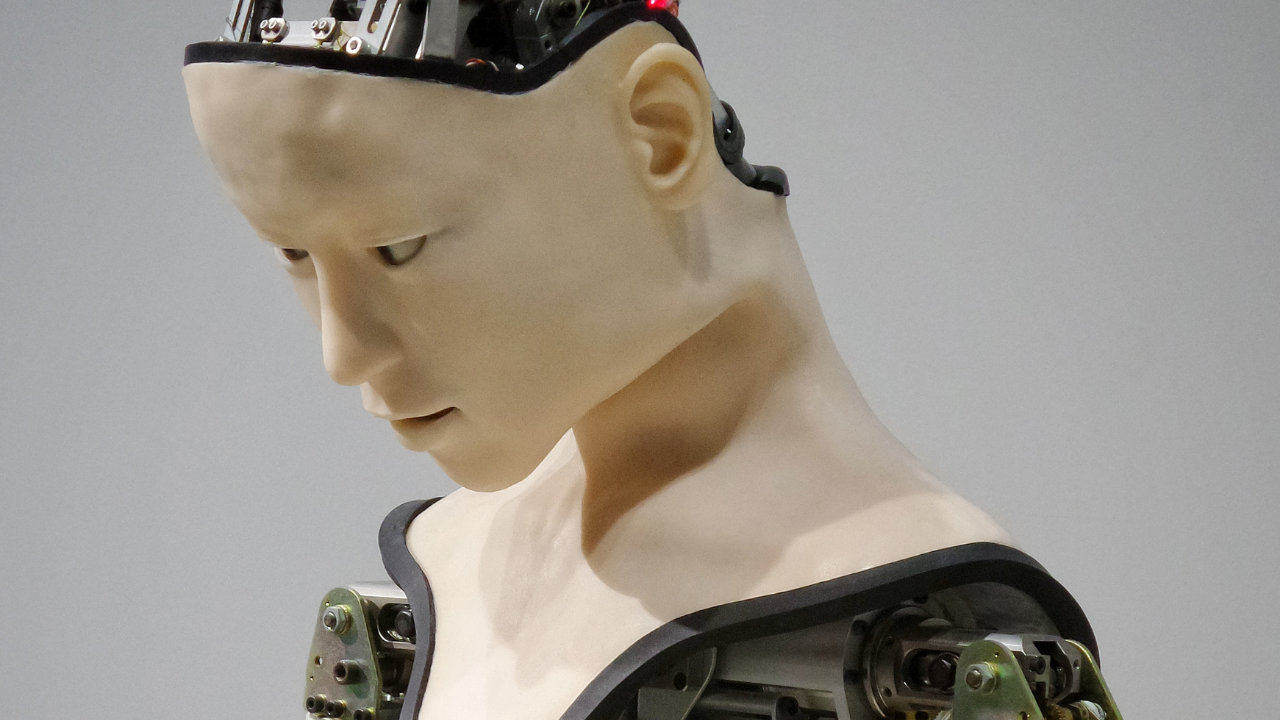
Humanity’s affinity with the human-like follows a particular growth curve: while affinity grows steadily as the observed entity becomes more human-like, there is a pronounced dip and a rejection of affinity when that entity comes close enough to be mistaken for human only some of the time, intermixed with distinct non-human-like aspects. This is what philosophers and researchers call the uncanny valley: inspired largely by Freud’s concept of Unheimlich, it is a particularly disconcerting feeling, a feeling of misplacement, an alien otherness that mimics something that is intimately known. Freud’s preferred example is walking down an unknown street that resembles closely a very familiar place. Our psyche tries and fails to overlap known patterns to an unknown entity, resulting in a jarring disconnect.
In today’s world, computer-generated graphics and robotics are uniquely good at provoking the uncanny. Humanoid robots that look and act very human until they don’t make us profoundly uncomfortable; realistic video game graphics yank us out of suspended disbelief when gazing at the glassy, dead eyes of CGI characters. Just like nausea caused by a moving vehicle is our brain’s way of correcting for contradictory sensory input, the unheimlich is our instinctive reaction to jarringly conflicting patterns of familiarity.
Ubiquitous computing tends to insert human-like interactions and behavioural patterns into physical and situational realities that we expect to be neutral; incapable of knowing. Fridges that recommend food purchasing habits, phones that impose fitness regimes, even cars that break for us, all run the risk of rocketing us down uncanny valley’s slopes and into discomfort. Yet, ubiquitous computing has firmly positioned itself as the third computational revolution after mainframes and personal computers: companies are investing heavily in ubiquitous computing, and advances in machine learning provide for its behavioural pattern-matching motor. The problem is in the incentives: this is the first computational revolution that is crossing boundaries of affinity in actual physical space, and it is being driven by financial gain without a complementary critique and analysis of behavioural effects on human interaction with spaces perceived as behaviourally neutral.
Entities that try to pass for human struggle to cross the extremely high threshold of humans’ ability to recognize other humans (down to subconsciously noticing inadvertent micro-twitches of facial muscles). In ubiquitous computing, the struggle lies within empathy: humans are asked to accept that non-human entities and objects can achieve and enact anthropo-equivalent behaviours. For that to work, we need to be able to believe we can create an empathetic bond with these objects: trust that they will act, emotionally and rationally, like we would expect other humans to act. Now, we humans have no issues with anthropomorphising objects and natural events. However, we are not used to those objects and events actively interacting back: anthropomorphisation “works” as passive observation and post-facto assignment of intention to uncontrollable events. With ubiquitous computing, we are not only asked to suspend our atavistic disbelief in self-agency of inanimate objects — we are also, at least in some minimal part, aware that these objects have been coded to behave in certain ways by other human beings; nothing more than automata.
]]>tin.fyime@tin.fyiAnd now, for something completely different: the Non-human Turn2017-12-20T00:00:00+00:002017-12-20T00:00:00+00:00https://tin.fyi/completely-different
I am fascinated by the non-human turn’s perspective of relinquishing human creative primacy, and removing humanity from the fictitious focus of attention. In my reading, the non-human turn is a stream of thought that accepts reality as a complex, messy, system of interrelated actors and affects, operating in overlapping mixed systems — to analyse the human means accepting humanity’s place in a larger picture. The “non-human” part of this turn is a purposefully exaggerated focus on those systemic components that are not human. This over-focus is important, specifically because there is a need to balance out conceptual representation of non-human actors within a worldview.
The actor-network theory is a great example of how this exaggeration is dictated by the network’s infrastructure. If we apply ANT to information networks (arguably the most obvious medium for it), we accept that humans usually represent mere end-points in a massive network composed of thousands, if not millions of actors and mediators. Even if we focused on one tiny slice of the network’s actors, such as the TCP/IP protocol, our brains already cannot parse the massive numbers of concurrent connections, handshakes, redundant packet stream sends and receipts, SYNs and ACKs required for posting on a social media wall. These non-human actors are all mediators — most of them so minimally mediating that their effects cannot be felt, or can be felt only when they fail to mediate (such as a corrupt information package stream). Nonetheless, they all mediate, and some of them do it on a much grander scale. The obvious example are information-filtering algorithms — written mostly by humans, yes, but increasingly self-organising and self-controlling. These algo-mediators represent an awesome manipulative force when it comes to human expressions within the network, and most of our creative flows linked to networks are mediated by them.
Accepting the hybridisation and multiplicity of actor types in networks is especially important when taking a systems-thinking approach to analysing the creative and informational flows. In systems-thinking I have come across the tendency to over-analyse human components and their interactions, and considering non-human system components as simply functionally there. However, to truly understand system dynamics it is necessary to give non-human elements the same attention that humans command. Each system is uniquely expressed, and minute changes in any component can have radical repercussions on the rest of the system. Non-human system elements influence, and are influenced by, the system’s humans and non-humans alike. In the case of strongly mediating non-human actors, ignoring their presence is downright perilous, because of their influencing and manipulating roles.
How about affect in non-humans? In my opinion, it would be a mistake to limit affect to interactions involving humans (in whichever mix of human and non human relationships). However, in order to assign affect to pure non-human entities and systems not involving humans, we need to step away from defining affect in human terms. Defining affect in non-humans requires accepting that there must exist non-human versions of both biological and ideological underpinnings comprising affective interrelations.
Lastly, there is a glaring hole in the non-human turn rhetoric: it is being conducted by, and between, humans. Its very name ontologically positions the discourse into an othering, a definition through absence, rather than a definition of essence. Object-oriented ontology and speculative realism get bunched in, used like justification vehicles of sorts; but still, both these terms owe their relevance to a counter-positioning (to Kant) so suffer of the same positioning problem. A solution to this problem can be approximated through speculation, and exploration of alternate creative flows (spec sci fi, for example). While still suffering from having been generated from the same poisoned well of humanity, speculation (and absurdism, abstraction) provide for alternative models and answers to complement our limited understanding of otherness. We will never know whether any of the speculative forms gets it right, but at the same time, we wouldn’t be able to know whether they do because of our inherent bias of, well, being only human.
]]>tin.fyime@tin.fyiThe Otherness of Execution2017-12-10T00:00:00+00:002017-12-10T00:00:00+00:00https://tin.fyi/otherness-execution
“Executing Practices,” the sixth chapter in the Data Browser Series, takes a refreshing approach when analysing how expression is mediated through machine execution. The group of artists, thinkers and researchers take the first step in recognising that an analysis of computation seen solely through the agnosticism of execution would fail to capture how execution is situated within larger contexts of intent, expression, and agency — much like understanding how neurons fire won’t let us grasp the thought that is being expressed. However, rather than simply focusing on the larger picture, “Executing Practices” makes sure that the interventions still take into account that, at its core, each execution still remains a discrete, defined set of instructions parsed by a hyper-specialised machinic entity. This lowest level of understanding cannot be ignored or glazed over, because it will still encapsulate the practice of execution, however contextualised, into a series of discrete mathematical operations.
The book’s chapters deconstruct and challenge execution through brilliant artistic endeavours. Pritchard’s Critter Compiler subverts the bio-computational enslavement of living beings for their ability for injury and develops an executional system where living beings feed off of CPU heat, cooling it down at the same time, thus improving its computational capacity through nourishment. Schuppli interrogates the connections between two types of executions, the computational and the human-life-ending, by challenging the politics and practices of drone wars.
Now, the biggest barrier to human-machine affect in today’s computational ecosystem is the incomprehensible speed of computation of modern machines, which brings with it the incapacity of human beings to grasp the patterns of execution. Pattern matching and recognition, the “gut feeling” of almost-understanding or, at least, knowing to differentiate the is from the is not is a human evolutionary trait that saved our skin by recognising the slightly darker, possibly tiger-shaped shadow in the middle of a dark forest of shapes.
Execution travels at thought-blistering speed, but it wasn’t always the case: not so long ago, in the ‘80s ( i.e. exponential aeons in CPU years), we were able to slow down execution enough to grasp its shadows: home computers of that era were programmed through sound, and programs were loaded onto audio cassettes. Obviously, this meant that human ears were privy to the executing arcana.
The cited example of Polish “Mikrokomputer” hits very close to home. At the time, I was old enough to understand it, young enough to be fascinated by it, and my country was communist enough to not care about western copyright laws. So, like in Poland, Yugoslavia had a vibrant black market of code-jockeys that shared the latest games over local radio or in public libraries. I still remember the elation of hearing machines speak, the quasi-mystical element of listening to glitches, clicks and rasps, subconsciously labelling it as “execution in the making,” and slowly letting my brain grasp for patterns and differences between programs, their purpose and required executional medium. However, like ambrosia of greek mythology, execution code has marvellous properties but is not meant for humans to grasp. I also remember the distinct feeling of otherness: like the sounds of ’90s modems singing their connection song, the more you listened to it, the more you understood that the real information will always remain incomprehensible, hidden from conscious understanding because of the cognitive otherness of the medium they were communicating with.
This cognitive otherness permeates the space of execution, yet it’s hard to imagine or develop a conceptual connection between execution’s intent and nature: how to go deeper than solely recognising the alienness and taking it into account when recounting practices of execution? How to investigate the alienness itself, and develop frames of translation for machinic cognition?
]]>tin.fyime@tin.fyiOn Mimicry and Aliens - Figuring the Human in AI2017-11-10T00:00:00+00:002017-11-10T00:00:00+00:00https://tin.fyi/human-ai
Suchman touches upon a crucial aspect of what it means for an AI to be human: how is being human figured, according to which perspective, and how does our transposition of this figuration onto machines influence our understanding of the human in artificial intelligence? The opening paragraph touches upon mimicry — which implies a notion that a human-like AI will necessarily involve the creation of AI that replicates human-like behavior, such as autonomous rational intelligence, or awareness of self. I am incredibly fascinated by this dichotomy of purpose when analysing the I in AI — what does “being intelligent” mean? As humans, we have a very limited understanding of intelligence: our own. In fact, we even measure intelligence in animals with the same stick we use to measure our own intelligence. This puts us in an uncomfortably restrictive space when trying to understand what intelligence would mean for an entity that doesn’t share any of the biological, neurological, cultural, or affective underpinnings that form our understanding of intelligence. That is why figuring the human in AI signifies transposing a certain set of values onto a radically alien entity, simply because it is the only set of values we can understand. In the sci-fi novel “Blindsight,” Peter Watts tackles intelligence from the perspective of non-humans: in his world, self-awareness is seen as a hindrance rather than a benefit for higher evolution — if we’re to consider evolution from a perspective of survival. It is not impossible that self-awareness is an evolutionary dead end, a fluke that worked this once, on planet Earth, to make us into apex predators. We have no proof, or way of knowing, if the same evolutionary process resulted in self-aware entities on other planets or planes of existence.
The advent of AI is the first time we are confronted with the potential of a non-human evolutionary process and we’re somewhat at a loss as to how this evolution will play through. In “Superintelligence,” Nick Bostrom paints a number of potential scenarios with one common thread: humanity will be superseded faster than we think. Although Bostrom’s analysis falls short in many aspects, and his STEM maleness leaks through whenever he decided to tackle cultural or social aspects of intelligence, it is hard to poke holes at his narrative logic. Especially when we look at superintelligence, or achievement of a state of intelligence that is higher than ours, two factors are arguably inescapable:
it will happen at a speed we won’t be able to comprehend, and
we won’t be able to comprehend it anyway because we don’t have the intelligence required.
Embodiment, Emotion, Sociality
Of the three “necessary perspectives” that Suchman chooses to figure the human in AI, two are intrinsically connected (embodiment and sociality), while the third (emotion) is best looked at individually. Embodiment and sociality are two sides of the same coin: just as the bodied self acts as a generator and receptor of external stimuli, the interconnections between bodied entities act along the same principle. The parallel of embodiment between human and AI is, in my opinion, both radically true and fundamentally misleading. The radical truth lies in the affect that embodiment has on embodied entities: both uncontrollable and controlled, unknown and self-created. As humans are multilayered embodied entities, threading “read-only” emotional states with controlled cognitive responses where neither can escape the other, so machines have an imposed infrastructure that limits what it can or cannot do: software code and algorithmic systems are externally encoded, hardware has its own systems of control and override. The misleading aspect is the fact that, while we know of humans’ limits of control over their embodied selves, we can only theorise that the same will apply to machines. In fact, we cannot grasp whether machines will develop systems of complete control and manipulation of their own source code, especially if we take into account the superintelligent turn.
The vision of AI and robots as “emotional entities” is intrinsically linked to mimicry: what scientists and futurologists describe when talking about machines as “thoughtful, observant collaborators” is nothing more than coded behavior that tries to respond to external stimuli in a way that is perceived by humans as appropriate. Two things: firstly, we keep imposing our concepts of emotion onto alien entities whose emotional complexity will probably be fundamentally different than what we can understand. Secondly, we have seen multiple examples in which our best efforts in creating emotional machines work 90% of the time, and then fail in utterly alien ways. Perhaps we can hone that number to be much higher — however, we are still imposing a processing structure onto machines that is evaluated only based on output. We don’t have any control over how those outputs are created within the machines (check out my thesis, or the wonderful aiweirdness.com). The problem with creating machines that interact emotionally with human beings is that emotional attachment implies trust — trust is hard to create, and extremely easy to break. Even if a machine “behaves” perfectly 99% of the time, we will still kick it to the curb as soon as it acts in way that is so uncannily alien and different, we can’t bear to invest emotional energy to recreate the trust relationship.
Even the cited examples of socialised, emotionally driven robots Cog and Kismet, ultimately enact mimicry of human emotional states. While their development is driven by the interest in understanding whether robots can learn like children, through enacting progressively more complex behaviors and creating their own identities, the issue at hand is that we are still imposing a human-like growth process over a fundamentally alien concept. We need to find ways to foster AI and robotics to understand what intelligence, self-awareness, agency mean from their perspective - and it will probably mean not being human at all.
Thoughts on “Figuring the Human in AI and Robotics,” by Lucy Suchman
]]>tin.fyime@tin.fyiComputational Aesthetics and Informational Antimemetics2017-10-27T00:00:00+00:002017-10-27T00:00:00+00:00https://tin.fyi/antimemetics
Let’s start by reflecting on McLuhan’s quote that Clough chose as the introductory note to this document:
…the emergence of a new media is too violent and superstimulated a social experience for the central nervous system simply to endure.”
Marshal McLuhan (1994, 43).
In a nutshell, McLuhan exposes the fact that a new medium is like a virus for which humanity hasn’t yet developed antibodies. The superstimulation comes from both the amount of information, and from delivery methods of new media: the inability to filter signal from noise. Our brains gorge on the influx of information like a 3-year-old who’s given a bowl of sugar and a spoon. In this initial phase of a new mediatic landscape, humans painfully re-create their barriers and filtering systems, and interestingly enough, with each new form of media we find ourselves to be less able to erect the protective walls — each of the latest mediatic paradigm shifts (from radio and television, through early internet and social media, to algorithmic filtering, and AI-driven content) brought to us a new, arguably exponentially higher level of both influx of information and its memetic ability of bypassing our cognitive barriers and latch directly onto our brainstems. The immediacy of delivery, made possible by a reduction of levels of effort to parse and interact, paradoxically makes the exponential growth of information we receive that much more complex and unmanageable with each turn.
This is why I find it curious that Clough chose that opening passage: in her paper (at least according to my reading), Clough defines the new ontological turn of our relationship with objects, spurred (or made visible) by the information onslaught. The new potentiality of objects is defined as causal in and of itself — objects themselves own their potentiality, and their potentiality is defined in relation to other objects, removing the human perception as a defining metric for objects’ potentiality from the ontological loop.
This conceptual overlap between McLuhan’s superstimulation and the insistence on the ontological turn makes me wonder how much our present overwhelmed state of little or no control over the newest mediatic evolutions influences our perception of the ontology of objects. The turn itself is being measured from within a paradigmatic shift that positions us in a state of little control, so it seems likely that we will find the ontological turn appealing. This might also mean that, when (if) we develop antibodies, our own informational antimemetics, we will experience an opposite reaction to our relationship with, and understanding of, objects: our affective, material, cognitive perception of how objects are known will shift back into focus, thanks to our greater feeling of control over the objects themselves.
Now over to Clough’s reading of arts as politics, and how the recent commodification of art undermines the fundamental need of art to expose and impose new mindsets, perspectives, and create original thought and affect. This drive, too, can be analysed from the perspective of humanity’s lack of informational antimemetics. As long as the informational tail wags humanity’s dog, we lack the ability to own art, and position ourselves as focus of creation. Rather, creation is dependent on informational streams, and therefore acts as generator. While this shift in and of itself wouldn’t be problematic, and might even be seen as refreshing and original in an alien, “art that is never before seen” way, we must remember the economic and capitalist underpinnings of the new informational revolutions. The current era of information, while born from a push for neutrality, equality, and betterment of humanity, has been coopted and taken over by market systems that overwhelmingly drive innovation and have, for all intents and purposes, become owners, creators, and rulers of the new informational spaces. This means that the creation of new aesthetics that originates from without the human sphere will be driven and informed by a machinic system designed for maximum return of financial investment as its intrinsic goal. This is antithetical to what we as humans recognize as “aesthetic endeavour”, and therefore feel alienated when caught within the content production industry. I fully agree with Clough when she declares that
…we need first to rethink the object and commodification; we need to rethink neoliberalism’s forms in terms of the developments of digital technology.
The new ontology, and the relation with the non-human turn, has the potential to be the single biggest revolution in artistic creation. Dethroning the human is neither a new proposition (eppur si muove), nor is it inherently good or bad. However, we must not forget how the current dethroning has been shaped, which forces drive it, and which goals it strives toward. For this to happen we need to wait for two factors to become true:
We need to develop informational antimemetics, and
The non-human object needs to reach a stage of self-awareness that will permit it to shape its own artistic vision
Summary and critique of “Computational Aesthetics in The Practices of Art as Politics” - Patricia Ticiento Clough
]]>tin.fyime@tin.fyiStatements, Logic, and Control: A summary and critique of Andrew Goffey’s “Algorithm”2017-10-19T00:00:00+00:002017-10-19T00:00:00+00:00https://tin.fyi/statements-logic-control
Goffey’s paper focuses on teasing out the connection between algorithmic abstraction and the discursive power that the same abstraction represents, if seen as statement rather than just syntax. By opposing a reductionist and functional view of algorithms as descriptive entities, Goffey advocates for embracing abstraction by making the point that, while the push against abstraction is a valid direction when philosophically tackling other scientific spheres such as mathematics — in which abstraction removes the agent from perceiving the realities that such abstraction tries to define and, by doing so, inevitably distorts the main descriptive goal of the abstraction itself — algorithmic abstraction is what makes algorithms unique entities with real-world implications. This approach flips the direction of meaningfulness on its head when discussing algorithms — their abstractive nature is core to their real, pragmatic importance, not the other way around.
Perhaps the most important component of Goffey’s argument is the fact that algorithms are intrinsically connected to the material world. An algorithm without a practical implementation, or without data to process, can hardly be defined an algorithm, since by the most fundamental definition an algorithm is a set of instructions aimed at accomplishing a goal. The essence of algorithms is thus material, but it is also their end result, while their roots are firmly abstract. Algorithms are also to be perceived holistically and systemically — as complex parts of an unimaginably complex whole. I would additionally mention that algorithmic functions, in fact, rarely if ever live in a self-sufficient world — unless it is a classroom. Algorithm in practical implementation is never singular, but a multitude of algorithmic realities, each of them potentially self-sufficient but nevertheless rarely practically useful by themselves, conjoining in systemic patterns that are not defined by an understanding of their function, but by the efficiency of their final computation. This raises questions about “algorithms as statements”: if algorithmic systems are more easily comparable to cells in an organism than to discrete entities, how far does the “algorithm as statement” argument go, and can we cognitively define or describe statements that are composed of unfathomable concepts? Perhaps the “machinic discourse” is the only frame of reference within which it would be possible to understand these systemic statements, and thus cognitively out of reach for non-machinic entities.
The one aspect that I would have wanted the text to analyse further is the paradigmatic nature of algorithmic creation. The “logic” part of “logic and control” descriptors of algorithms stands for the problem description, or definition of the paradigm within which an algorithmic function will produce its sequence of instructions, or “control”. The chosen paradigm not only influences the entire algorithmic existence, it is also intrinsically linked to the sociocultural existence of its creator, or creators. It is a human framework that defines the paradigms within which any algorithm will exist, which essentially means that human-built algorithms are constrained within the human mind-space. This is particularly fascinating from an artistic perspective — questioning and subverting paradigms is a wonderful artistic playground. If we look specifically at Software Arts, this brings us to a third hierarchical level: not only is software itself art, but the choices made when deciding how to define and solve software problems can be an artistic expression as well. This choice of paradigm goes beyond picking a certain programming language over another — it represents a conscious meta-analysis of the choices made when giving birth to algorithmic systems.